
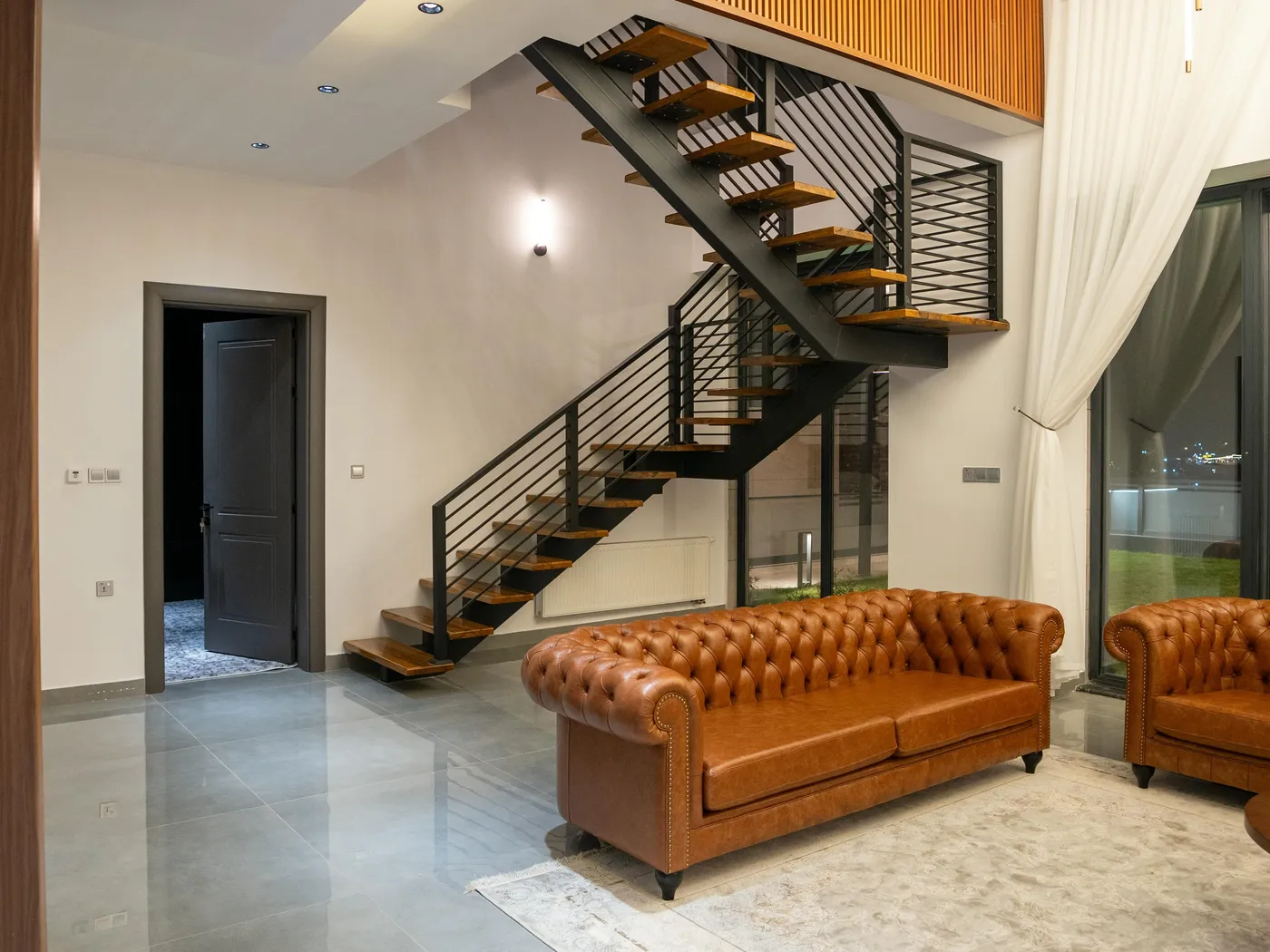
Floating Stair Remodeling in Miami, FL
Miami Floating Stairs Specialists transforms dated traditional staircases and upgrades existing floating stair systems — tread replacement, open-riser conversions, railing overhauls, and full structural transformations handled in-house.
At Miami Floating Stairs Specialists we handle floating stair remodeling throughout Miami, with a significant share of our work in high-rise condo buildings, waterfront estates, and townhomes across Brickell, Coral Gables, and Miami Beach. The assessment process here differs from standard residential work. Concrete structural walls — common throughout South Florida construction — require a different anchor approach than wood stud framing. Before any scope is written, we scan the wall at each tread location to confirm wall thickness, rebar position, and concrete density. Anchor method, embedment depth, and epoxy selection come from that data — not from assumptions carried over from a different project type.
Salt air is the detail that separates Miami stair remodeling from inland work. Hardware that survives a decade in Orlando can corrode in three years at a Brickell waterfront property. When we assess an existing floating stair in Miami, we test every anchor, inspect every exposed fastener, and check for galvanic corrosion between dissimilar metals — a recurring issue when original installers paired standard carbon steel hardware with stainless cable rail systems. Open-riser conversions on traditional closed-stringer stairs require structural reinforcement that accounts for Miami's humidity-driven material behavior. We specify systems and finishes that hold up under those conditions, not just under a clean-air load test.
Material selection for tread replacement in Miami is more constrained than the catalog suggests. Solid hardwoods perform best when the interior is climate-controlled year-round — standard in most Miami residences, but not all. In properties that see seasonal humidity swings, we favor white oak or ipe over walnut for dimensional stability. Glass treads are increasingly common in waterfront properties where the view through the stair matters as much as the stair itself. We use 12mm tempered laminated glass with polished edges and stainless point-fixed brackets or recessed aluminum channels, depending on the load path. All tread cuts come from field dimensions — not manufacturer nominal sizes — because every opening in a poured concrete system carries its own tolerances.
The railing change that updates a Miami interior fastest is the cable-to-glass conversion. Cable rail systems dominated the South Florida market for fifteen years; frameless glass is now the standard in luxury renovation. We remove existing posts and cable, patch tread edges where posts were set, and install low-profile glass panel systems with concealed hardware and either stainless or matte black cap rails. The visual result in a high-ceiling Brickell loft or a Coconut Grove townhome is immediate — the stair reads as part of the room rather than a barrier cutting through it. Guard height, panel thickness, and post spacing are specced to Florida Building Code requirements for the occupancy type.
A significant portion of our Miami remodeling work involves condo building approval requirements. Most buildings in Brickell, Edgewater, and Midtown require submittal packages before any interior work begins — scope drawings, material specifications, contractor insurance certificates, and a letter of intent. We prepare these documents as part of project kickoff. For projects requiring plumbing or electrical coordination, we identify which licensed subcontractors the building accepts and coordinate scheduling with the building manager to book freight elevator time, establish working hours, and arrange the required inspections. Getting the paperwork right at the start is the single biggest factor in keeping a Miami stair remodel on schedule.
Project timelines for stair remodeling in Miami typically run three to seven business days for residential work, and longer when condo building access restrictions are in play. In occupied residences, we set up dust barriers, protect flooring from the stair to the nearest exit, and stage materials outside the living area. Daily cleanup is part of every project. We do not leave open anchor holes, exposed metal edges, or debris inside the unit overnight. If a project has a morning-only work window due to building rules, we plan the sequencing around it so the stair remains usable outside those hours.
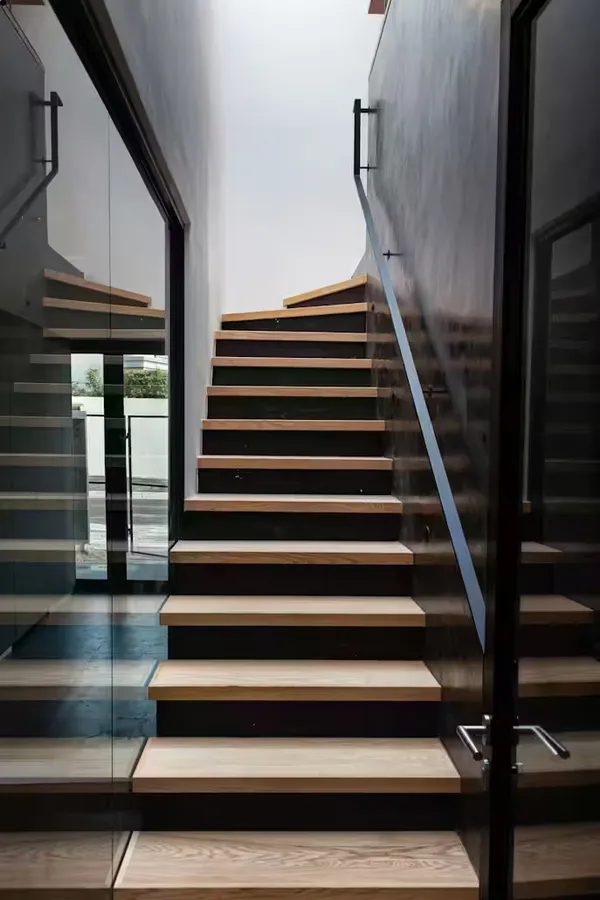
Ready to transform your staircase?
We assess the existing structure and provide a full itemized proposal within 48 hours of the site visit.
- ✓ Licensed & Insured
- ✓ Miami Code Compliant
- ✓ On-Time Completion Guarantee
- ✓ Deposit-Based Site Assessment
How We Deliver Floating Stair Remodeling
Floating Stair Remodeling — FAQ
Do I need condo board approval to remodel my staircase in a Miami building?
How does salt air affect existing floating stair hardware in Miami?
What anchor hardware is used in Miami's concrete walls?
Can I replace cable rail with frameless glass without removing the treads?
How much does floating stair remodeling cost in Miami?
Start Your Floating Stair Remodel in Miami
Contact Miami Floating Stairs Specialists for an on-site structural assessment and a detailed itemized quote for your remodeling project.