
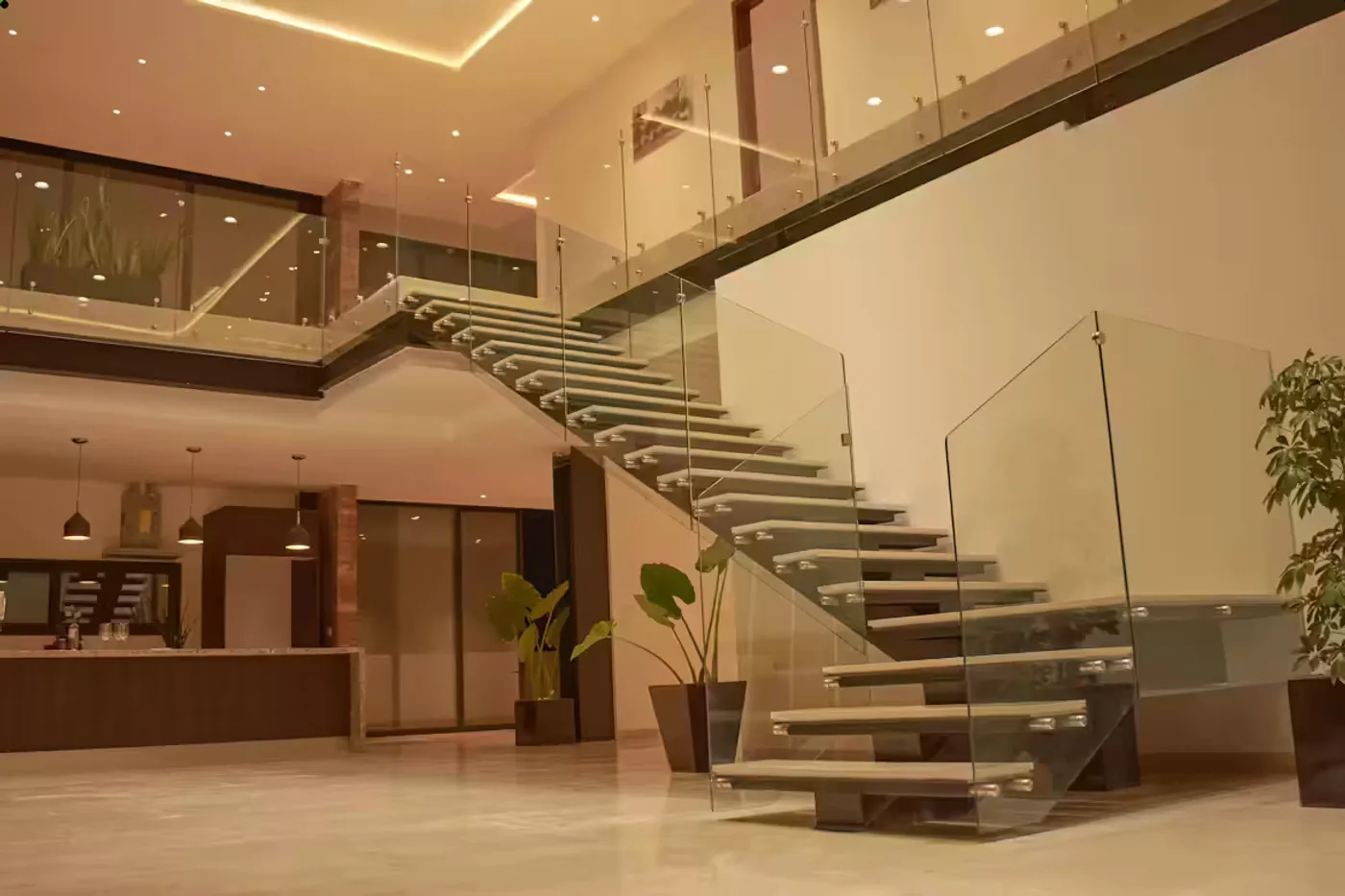
Wood Tread Options for Your Floating Staircase in Miami, FL
The structure is laser-cut steel. The difference you feel and see is the wood you choose — species, grain, hardness, and finish all determined by your home and Miami's climate.
At Miami Floating Stairs Specialists , every floating stair system we build uses a laser-cut steel structure fabricated in our shop — delivered finished, installed without on-site welding or grinding. This page is about the wood tread choice: the species, finish, and thickness that determine how your staircase looks, feels underfoot, and holds up to Miami's humidity, salt air, and UV intensity.
Selecting the correct hardwood species is critical for longevity in a subtropical climate where relative humidity frequently exceeds seventy percent during summer months, necessitating specific wood properties to prevent structural failure. We prioritize white oak and black walnut due to their closed-grain structures which resist moisture absorption better than open-pore alternatives like ash or pine that are prone to swelling in humid conditions. Each board undergoes kiln-drying processes that reduce internal moisture content to match the equilibrium moisture content of Miami indoor environments before fabrication begins, ensuring dimensional stability upon installation.
Our milling protocol includes acclimatization periods where lumber is stored on-site for up to two weeks prior to cutting to prevent post-installation expansion or contraction issues caused by thermal cycling. We treat all wood surfaces with marine-grade sealants that penetrate deep into the grain to create a moisture barrier without compromising the natural texture of the material, protecting against salt air infiltration common in coastal properties. This treatment ensures that the finish remains intact despite the constant temperature variations caused by air conditioning and outdoor heat exposure typical in South Florida residential zones.
Structural integrity relies on matching the wood density to the specific span requirements of your staircase design, which we calculate during the initial engineering phase to prevent sagging or flexing under load. We utilize hardwoods with high Janka hardness ratings to ensure resistance against wear from foot traffic without requiring excessive surface coatings that might peel under humidity stress, balancing durability and finish quality for long-term performance. This balance ensures the stairs remain safe and visually pristine for years without significant maintenance intervention required by homeowners.
Custom carpentry allows us to incorporate moisture-resistant adhesives and fasteners made from stainless steel or galvanized alloys to prevent rust staining on the visible wood surfaces caused by chemical reactions with metal components. Corrosion is a primary failure point in coastal areas, so we avoid iron-based hardware that can oxidize when exposed to salt air infiltration through windows or doors near stairwells, which could compromise structural bonds over time. This attention to material compatibility prevents degradation of the connection points between the treads and the hidden support system.
Ready to elevate your space?
Our structural engineer will visit your property and provide a full engineering proposal within 48 hours.
- ✓ Licensed & Insured
- ✓ Miami-Dade Permit-Ready Documentation
- ✓ On-Time Completion Guarantee
- ✓ Site assessment
How We Select and Install Your Wood Treads
Wood Tread Selection — FAQ
What does wood tread selection add to the cost of a floating stair system?
Floating stairs vs traditional stairs which is better?
What are the building codes for floating stairs in Miami FL?
Best materials for floating stairs in humid Florida climate?
How do you ensure durability against humidity fluctuations?
Choose Your Wood — We Handle the Steel and the Install
Site assessment. Species samples at the visit. Itemized proposal within 72 hours.